

Date : October 15, 2026
Dry skin can make your face feel tight, rough, flaky or uncomfortable.
Sometimes the problem is obvious, such as visible flaking around the nose or cheeks. In other cases, your skin may simply feel tight after cleansing or look dull even when you’re using moisturiser regularly.
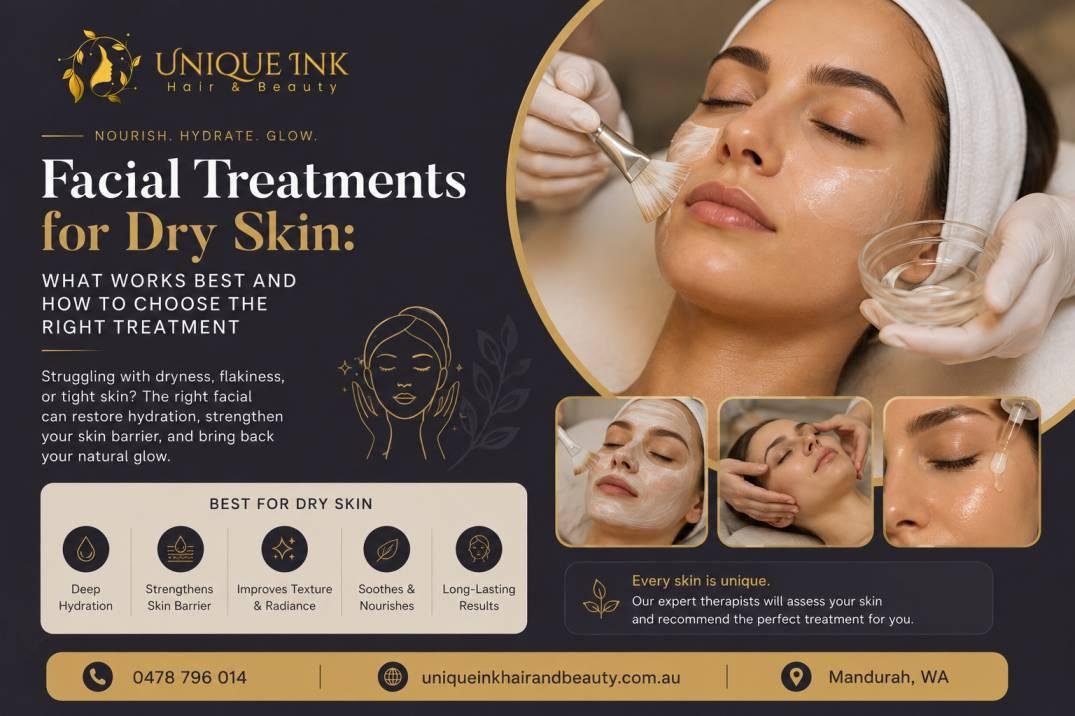
If you’ve been searching for facial treatments for dry skin, a professional facial can be a useful part of a well-planned skincare routine.
However, not every facial is suitable for every skin type.
The right treatment depends on your skin’s current condition, sensitivity, hydration levels and skincare history. A treatment that works beautifully for oily or congested skin may be too aggressive for someone with a compromised or sensitive skin barrier.
This guide explains what causes dry-looking skin, which facial treatments may help, what to avoid and how to choose a professional facial in Mandurah.
Quick answer: For dry or dehydrated skin, treatments focused on gentle cleansing, hydration, nourishment and supporting the skin barrier are generally more appropriate than aggressive exfoliation. A professional skin assessment can help determine which facial is suitable for you.
These two terms are often used interchangeably, but they aren’t exactly the same.
Dry skin generally refers to a skin type associated with lower oil production.
People with naturally dry skin may experience:
Dehydration refers to a lack of water in the skin and can affect different skin types, including oily skin.
Someone can therefore have oily but dehydrated skin.
Understanding this difference matters because your facial treatment should address what your skin actually needs rather than simply treating every dry-looking complexion in the same way.
There isn’t always one single cause.
Dry or dehydrated-looking skin can be influenced by:
Mandurah’s coastal environment and exposure to sun and wind can also influence how comfortable your skin feels.
If dryness is persistent, severe or accompanied by inflammation, cracking or other unusual symptoms, consider speaking with a healthcare professional rather than relying solely on salon treatments.
For many people with dry or dehydrated-looking skin, a hydrating facial is a logical starting point.
The focus is generally on replenishing moisture and leaving the skin feeling more comfortable and refreshed.
A hydrating facial may involve:
The exact process depends on the salon and your individual skin needs.
Dry skin often benefits from products designed to support the skin’s moisture balance.
A nourishing facial may focus on:
The goal isn’t necessarily to make your skin look dramatically different after one treatment.
Instead, a good facial should leave your skin feeling more comfortable and looking refreshed.
Exfoliation can help remove dead skin cells and improve the appearance of rough texture.
However, more exfoliation isn’t always better.
This is particularly important for dry or sensitive skin.
Over-exfoliation can contribute to irritation and may leave the skin feeling even more uncomfortable.
A professional can assess whether exfoliation is appropriate and choose a gentler approach when necessary.
Facial massage can be a relaxing part of a professional facial.
It can help make the treatment feel soothing and enjoyable while products are applied to the skin.
However, massage shouldn’t be viewed as a cure for chronic dry skin.
The main benefit is often the combination of relaxation, product application and the overall facial experience.
One of the most useful parts of having a facial professionally is the opportunity to discuss your skin with a trained beauty professional.
Before treatment, mention:
This information can help your beauty professional decide whether a particular facial is appropriate.
There’s no universal schedule that works for everyone.
Your ideal frequency depends on:
Some people may benefit from regular professional facials as part of their beauty routine, while others may only book treatments before special occasions.
A facial should complement your daily skincare routine rather than replace it.
You may notice:
These signs don’t automatically mean you need a facial.
They can indicate that your skincare routine needs reviewing.
Preparing properly can make your appointment more comfortable.
Keep your routine simple.
Avoid experimenting with several new products immediately before your facial.
Tell your therapist about active skincare products.
This is especially important if you’re using products that may increase sensitivity.
Avoid unnecessary exfoliation.
Don’t assume you need to scrub your skin before a professional facial.
Arrive with realistic expectations.
A facial can improve the appearance and feel of your skin, but one appointment isn’t a permanent solution for every skin concern.
Your beauty professional should provide personalised aftercare instructions.
In general, avoid unnecessarily irritating your skin immediately after a facial.
This may include:
Follow the specific instructions provided by your facial professional.
If your skin reacts unusually after treatment, seek appropriate professional advice.
Scrubbing harder doesn’t necessarily make dry skin smoother.
Hot water can leave some people’s skin feeling more dry and uncomfortable.
Using too many new products makes it difficult to identify what is actually helping or irritating your skin.
A healthy-looking complexion isn’t only about exfoliation. Maintaining the skin barrier is important too.
Professional facials can support your skincare routine, but long-term skin health involves consistent care.
A facial that’s popular online may not be appropriate for your skin.
| Factor | Professional Facial | Home Skincare |
| Skin assessment | Professional guidance | Self-assessment |
| Convenience | Appointment required | Easy to do at home |
| Relaxation | High | Depends on routine |
| Product selection | Professional recommendations | Personal choice |
| Regular maintenance | Periodic | Daily |
| Best use | Professional support | Ongoing routine |
The two approaches work best together.
A professional facial can complement a consistent home skincare routine.
Depending on the treatment and product range, skincare designed for hydration may include ingredients such as:
However, the ingredient list alone doesn’t determine whether a product is right for you.
Your skin type, sensitivity and overall routine matter too.
If you have a diagnosed skin condition or persistent irritation, consult an appropriate healthcare professional.
A beauty treatment isn’t a replacement for medical care.
Consider speaking with a GP or dermatologist if your skin has:
A professional facial can support cosmetic skin care, but medical skin conditions need appropriate medical assessment.
At Unique Ink Hair & Beauty, facials are part of a broader range of professional beauty services designed to help clients look and feel their best.
Located at 2/93 Pinjarra Road, Mandurah WA 6210, the salon provides facial treatments alongside cosmetic tattooing, Fine Line Tattoos, threading, waxing, brow and lash tinting, microneedling and hair and makeup services.
If your skin feels dry, tight or dull, discussing your concerns before choosing a facial can help ensure the treatment is appropriate for your current skin condition.
The aim should always be to choose a treatment based on your skin’s needs, rather than simply selecting the most popular facial.
A gentle hydrating or nourishing facial may be suitable for many people with dry skin, but the best treatment depends on individual skin condition and sensitivity.
A suitable facial can temporarily improve the feel and appearance of dry or dehydrated skin by focusing on cleansing, hydration and nourishment.
There is no universal schedule. Your treatment frequency should depend on your skin, the type of facial and advice from your beauty professional.
Gentle exfoliation may help with rough texture, but over-exfoliating can cause irritation. A professional can determine whether exfoliation is appropriate.
Dry skin is generally a skin type associated with lower oil production, while dehydration refers to insufficient water in the skin.
Yes. Oily skin can still lack water and appear dehydrated.
Avoid unnecessary exfoliation and introducing multiple new skincare products before your appointment. Tell your therapist about your current skincare routine.
Follow your professional’s aftercare instructions and avoid unnecessarily irritating the skin immediately after treatment.
Possibly, but tell your beauty professional about your sensitivity before treatment so they can determine whether the facial is appropriate.
Unique Ink Hair & Beauty offers facial treatments at 2/93 Pinjarra Road, Mandurah WA 6210.
Dry skin doesn’t necessarily mean you need a complicated skincare routine.
The first step is understanding whether you’re dealing with naturally dry skin, temporary dehydration or another skin concern.
A professional facial can be a useful addition to your beauty routine, particularly when the treatment is selected according to your individual skin needs.
For dry or dehydrated-looking skin, gentle cleansing, appropriate hydration and barrier-conscious skincare are generally more useful than aggressive treatments.
If you’re looking for facial treatments in Mandurah, speak with a professional before choosing your treatment. A consultation can help you understand what your skin needs and whether a particular facial is suitable.
Ready to give your skin some professional care? Contact Unique Ink Hair & Beauty at 2/93 Pinjarra Road, Mandurah WA 6210 to discuss your facial treatment options and book an appointment.


Get a unique makeover with Unique Ink hair and beauty. We are offering wide range of beauty care services for you. From skin and hair treatment to waxing and threading, we provide you reliable solutions according to your requirements. We are passionate to make you more beautiful and youthful.


